Who Cares? – Seth Godin

http://sethgodin.typepad.com/seths_blog/2012/01/who-cares.html

Caring, it turns out, is a competitive advantage, and one that takes effort, not money.


Like most things that are worth doing, it’s not easy at first and the one who cares isn’t going to get a standing ovation from those that are merely phoning it in. I think it’s this lack of early positive feedback that makes caring in service businesses so rare.


Which is precisely what makes it valuable.

More than…

“User Experience is more than…

  • visual design
  • front end development
  • websites
  • software
  • technology
  • a piece of the puzzle
  • a diagram
  • a process
  • a set of tasks

It is all of those things and so much more. It is every single detail we take in from the world around us; if our lives were a movie it would be mise en scene. People are constantly experiencing, taking in the world around them through their senses. “An Experience” is those sensations (things seen, smelled, felt, etc.) from a moment in time that were in some way relevant enough to a person that they are recalled when this moment is remembered.

This philosophy is crucial to the success of any business, non-profit, or group of people providing a good or service to others. When the consumers interaction with a product or service is recalled, if the memory is happy and positive then the person will be willing to continue spending money to use the offered product/service, and if they really love it they will even evangelize for the product/service or brand. If they recall a negative experience however, then they will either not return or begrudgingly use the product/service until a competitor comes along and provides a more pleasant experience.

User experience for an organization is any experiential quality that involves the product or service provided. Focusing on delivering a positive experience is critical to the long term success of any organization. 


Photoshop lies

The Importance of Dog-Fooding

Felton says the main lesson he learned from the experience of designing and iterating Timeline is that “Photoshop lies.” “You can come into a meeting with a very beautiful comp and it’s like, ‘Oh yes, we should do it that way,’” he says. “But you’re never going to know if you can do it that way until you pump in the real data and live with it for days or weeks.”

To make sure they got it right, Facebook released Timeline to its own employees during the development process, to make sure that the paradigms they were developing worked for all users, those with a ton of status updates, for example, as well as those with just a few.

“As a designer, you have your baby that you want to try and sell. To make it saleable, you might pick someone who has really nice photos in their profile and use that to make your mockups,” Felton says. “But you’re ultimately just lying to yourself and the rest of the group if you think everyone’s page is going to look like that.”

I remember working on my first graduate school design project, a RSS feed reader for Mozilla firefox. My team worked hard to come up with a really solid design, that fit the aesthetic of firefox and managed RSS feeds in a very clean way. It was not until our presentation however that we realized that though still a good solution, there were many kinks in the design we had not accounted for because we used data that “fit neatly” into our mockups. We had not accounted for links and blog titles that went above our expected average character count nor had we really pushed the boundaries of how our tool would scale.


This is on top of the fact that even if you feel like you consider all of the options, and it still looks great in photoshop, it might end up not working as well as it looks like it should. This just exposes the value of building prototypes, not necessarily fully coded prototypes, but just something to get your hands on to start to evaluate the design as it is used, not just as it looks on the surface.

I’m tired of “Well it works…”

Because no, it doesn’t! To hear ‘well it works’ is one of the most frustrating responses one can hear coming from those who make decisions about a products development. ‘It works’ to an engineer and ‘it works’ to a normal person, who is trying to accomplish a task, mean two entirely different things. To an engineer it means it is possible. While it may be technically possible, it does not ‘work right’ or ‘work smart’ for someone who does not think the way ‘it works’ for an engineer is a way it makes sense for the task to be accomplished. If it takes me 12 clicks and with any or all being completely hidden or unintuitive to do something as simple as setting an alarm on a cellphone (a very common task) then it does NOT work, even if it is possible. Hearing ‘well it works’ is usually a sign that the current design is viewed as adequate or ‘good enough’.


But that leads to another one of the most frustrating responses that can be heard ‘it’s good enough’. I understand that constraints are ever present in every design situation. There is never enough time, never enough understanding of who the user is, always just a few more tweaks that can be made to make a design just that much better. I also understand that embracing constraints and reacting to the situation can inspire even more innovative work. But to hear ‘it’s good enough’ is a cop out. It can always be better. You can’t let that stop you from delivering, but to just write off a piece of a design as adequate and ‘good enough’ will never lead to a pleasurable experience for anyone who interacts with the design. The devil is in the details and as a designer it is always disheartening to hear someone involved with a product who does not care enough about the product to always be thinking of ways to iterate on it to make it the best it can be.

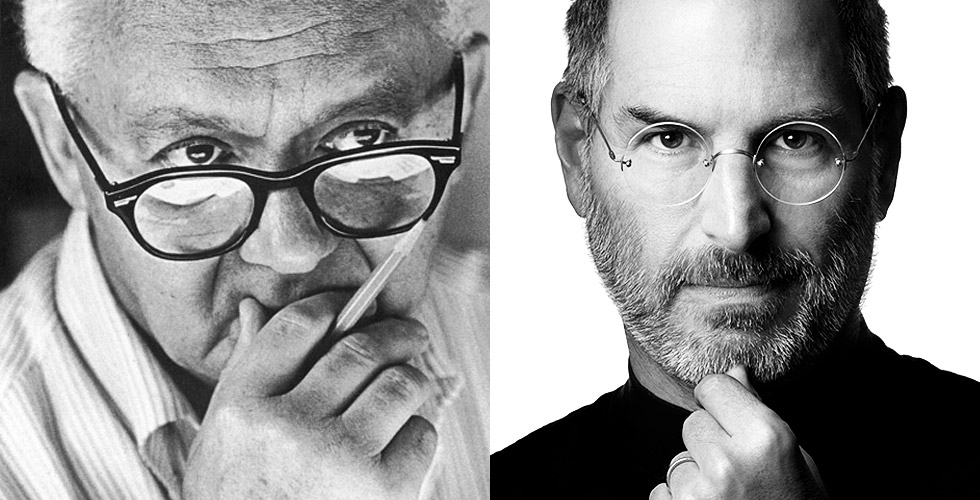
Great quote from a great post about Steve Jobs and Paul Rand

Jobs and Rand

Like any talent, you don’t find a good designer by asking for the one who’ll do it the cheapest or the one who will do it in two weeks instead of four. You find the designer that you trust enough to call an ‘expert.’ A designer makes only the amount of impact as the confidence they are given. – Josh Smith

http://idsgn.org/posts/steve-jobs-and-paul-rand-the-impact-of-confidence/

The Future of UX as They know it – from the Origin Digital Blog

Screen shot 2011-12-11 at 12.27.35 AM


A blog I wrote for the company blog.

There is a lot of discussion about the future of User Experience (UX) design among fellow practitioners. UX design, as an evolution from User Interaction design, Human Computer Interaction, Human Factors/Ergonomics, Usability Engineer, etc., has developed in parallel with computing and technology in our daily lives; a change that will continue as technology becomes ever more ubiquitous in our environment. However, this is not an attempt to further the discussion of the future of the UX practitioner, but it is my intention to explore how the rest of the business world currently views UX as well as how I view their understanding of the field, which will hopefully mature in the near future.

Currently, the biggest issue with the field of UX is the blank stare that follows when you tell someone you are a User Experience designer. It is usually followed with a “Huh?”, which then needs to be addressed with a crafted elevator pitch. The pitch explains how the UX role “is responsible for designing not just the layout of an interface, but also understanding the humanistic approach a user takes during their interaction with the software in order to appropriately accomplish a desired task.”

Imagine the design of an ATM at the bank. UX design is not just about the placement of buttons on the machine, but it is also about creating a machine that accommodates the withdrawal of ‘fast cash’ amounts. If the ATM was designed around a ‘fast transfer’ between accounts then the ATM wouldn’t work for the average person looking to grab some cash & be on their merry way.

As UX grows and more products are built with a specific focus, not only on getting the design right but also on getting the right design, there will be less blank stares and misconceptions about UX being a combination of a visual designer and a front end programmer. Although a new field, people will soon understand the value of UX design, both for individual products as well as for a company’s entire brand.

Thoughts on Design

target

“Ready. Fire. Aim!”

Without great design you might hit the target, but the odds are against you.

Tim Brown is on Team “Play With It”?

I just finished Change By Design by Tim Brown, the CEO and president of IDEO, and I highly recommend it, both for designers of all specialties, as well as all business leaders. I will write up more general thoughts and a review of this book in a future post, but I wanted to first write about a particular section where I drew stark similarities between Tim Brown’s explanation of “design thinking”, and how it resonates with my own understandings of design.

During my first semester of this past, my final year of my Master’s program, I took a class called Design Theory taught by Erik Stolterman. Our final project was the development and presentation of a design process theory, for a particular user group (from web developers to cake decorators, chosen by each team). My team decided to not only introduce how we understand, verbalize, and visualize the design process, but also to show our particular user group how to “fuel” our model to produce better, more creative, results.

We envisioned our clients to be small web development teams, some designers, some developers, known for producing good results, but starting to feel stuck in a rut producing deliverables that all look and feel the same.

I loved this project and was thrilled by the opportunity to present many theories and concepts I had been refining, of my own understanding or the design process, since I began learning about interaction and experience design. The major idea I proposed was the design process as a amoeba-like container, filled with many design activities which produce one of two effects on the design space: expansions, and contractions. “Expansions” are activities focused on creatively exploring each individual, unique, design space for the possibilities and opportunities it provides. “Contractions” narrow the focus and are about making decisions about what is possible within the project constraints. These opposing activities keep the design process in a continually moving motion.

Our team felt that many people struggle more with the “expansion” activities and using play can fuel exciting, unpredictable, creative ideas and insights which will take final designs to the next level.

As I read Change By Design, I was struck when I came to the section where Brown talks introduces what he calls “convergent and divergent thinking” (Chap 3, pg. 66). “Convergent thinking is a practical way of deciding among existing alternatives. What convergent thinking is not so good at, however, is probing the future and creating new possibilities.” On the other hand, “the objective of divergent thinking is to multiply options to create choice.”

“By testing competing ideas against one another, there is an increased likelihood that the outcome will be bolder, more creatively disruptive, and more compelling.” Or as we summarize it, “Play With It”.

This duality, expanding and contracting, diverging and converging, yin and yang, is what leads to designs that really change the world.  “Divergent thinking is the route, not the obstacle, to innovation.”

Check out our final group theory project here — “Play With It”.

And you can find Tim Brown’s book here on Amazon.com.

© Copyright CJ Page